Tel: +86-150-1280-2327 Email: granitecomponents@163.com
- All
- Product Name
- Product Keyword
- Product Model
- Product Summary
- Product Description
- Multi Field Search
 English
Views: 256 Author: Site Editor Publish Time: 2025-11-25 Origin: Site


Granite parallels are precision tools widely used in manufacturing, machining, and metrology. These flat, rectangular blocks provide a stable and accurate reference surface for measuring, setting up workpieces, and ensuring perpendicularity or parallelism in machining operations. The reliability of granite parallels comes from both the inherent stability of granite and the meticulous process involved in their production. Understanding how granite parallels are made reveals not only the technical craftsmanship behind them but also why they are preferred over traditional metal parallels in high-precision applications. This guide explores the materials, processes, and quality control steps involved in creating granite parallels, helping engineers, machinists, and tool enthusiasts appreciate their precision and durability.
Granite is favored for parallels due to its exceptional hardness, dimensional stability, and low thermal expansion. Unlike steel or aluminum, granite resists warping, rusting, and wear over time, ensuring long-lasting accuracy. Its microstructure—a mix of quartz, feldspar, and mica—contributes to uniform density and mechanical rigidity.
Key characteristics that make granite ideal for precision parallels include:
| Property | Value/Impact |
|---|---|
| Hardness | 6–7 Mohs; resists scratches and deformation |
| Thermal Expansion | ~4–7 ×10^-6 /°C; minimal size change with temperature |
| Flatness Potential | Can achieve sub-micron flatness over small surfaces |
| Vibration Damping | Reduces machining or measurement errors due to vibrations |
Granite parallels are therefore capable of maintaining precise parallel surfaces for decades, making them indispensable in toolrooms, inspection labs, and CNC setups.
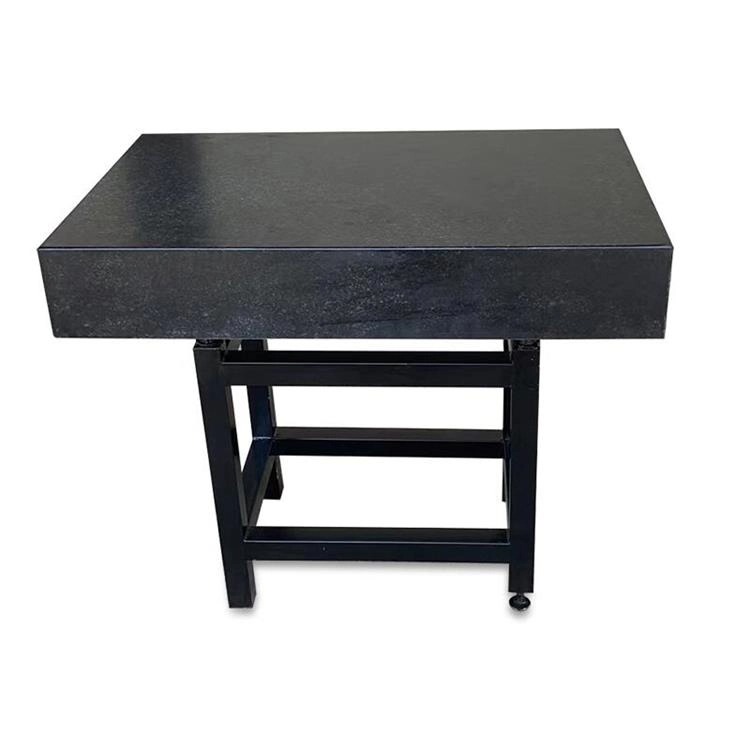
The production of granite parallels begins with sourcing high-quality granite blocks. Not all granite is suitable; only fine-grained, homogenous granite with minimal fissures or inclusions is selected.
Selection Criteria:
Grain Uniformity: Fine, even grain ensures consistent surface flatness.
Color Consistency: A visual indicator of mineral uniformity, which correlates with mechanical stability.
Lack of Defects: Cracks, veins, or voids could lead to uneven surfaces during grinding or long-term deformation.
After selecting the raw blocks, they are cut into approximate parallelepiped shapes using diamond wire saws. The initial cut determines the maximum material available for achieving final flatness and thickness tolerances.
The rough shaping stage involves trimming granite blocks into manageable sizes slightly larger than the final dimensions of the parallels. Diamond-tipped saws and CNC stone cutters are commonly used for this purpose.
Steps in Rough Shaping:
Marking and Layout: Each block is marked for cut lines and reference surfaces.
Sawing: Diamond wire or circular saws cut the blocks into rough parallelograms.
Initial Surface Flattening: Preliminary grinding removes major surface irregularities.
During this stage, care is taken to preserve as much material as possible for later fine grinding, ensuring that the final surfaces achieve extremely tight tolerances.
Precision is achieved through grinding, the most critical stage in making granite parallels. Two primary grinding techniques are used:
Lapping involves rubbing the granite surface against another reference flat using abrasive slurry. This process removes microscopic peaks, gradually improving flatness and smoothness.
Automated CNC surface grinders with diamond abrasives allow consistent material removal, ensuring parallelism between the top and bottom faces of the granite parallel.
Key Considerations:
Flatness tolerance: Typically ±0.005 mm for high-precision parallels.
Surface roughness: Achievable Ra values of 0.1–0.2 μm.
Even wear: Both surfaces must be ground equally to maintain overall thickness.
After grinding, granite parallels undergo polishing to improve surface smoothness and reduce microscopic stress concentrations. Polishing also enhances the visual clarity of surface markings used for reference during machining.
Finishing Steps:
Fine Abrasive Polishing: Using successively finer diamond pastes.
Edge Chamfering: Small bevels prevent chipping during handling.
Cleaning: Ultrasonic cleaning removes dust and abrasive residues.
The combination of grinding and polishing ensures the final granite parallels are both visually and functionally precise.
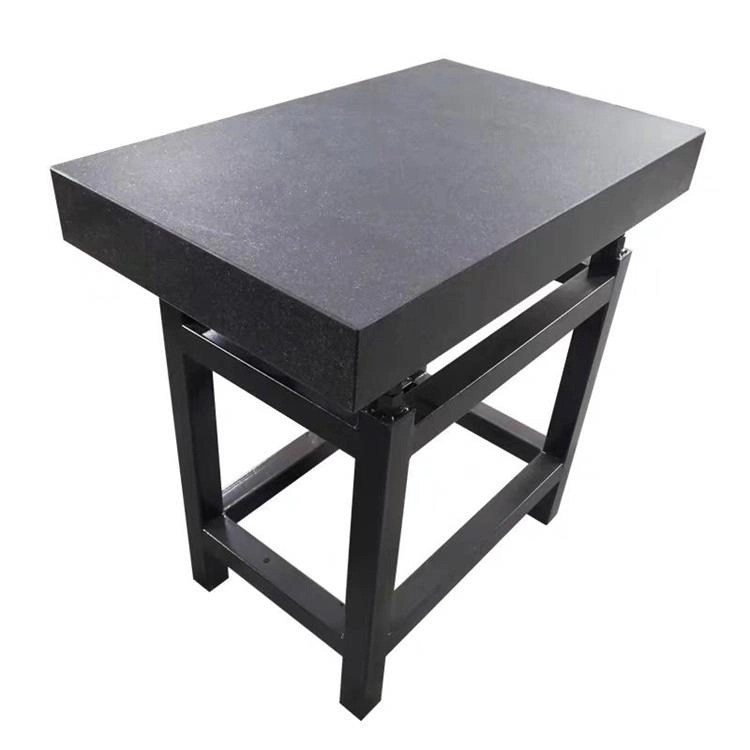
Calibration is a vital step in confirming that the granite parallels meet strict dimensional standards.
Techniques Used:
Optical Flats: Interferometry measures surface flatness by observing interference fringes.
CMM (Coordinate Measuring Machines): Verify dimensional tolerances and parallelism.
Surface Profilometers: Check roughness and surface irregularities at sub-micron levels.
| Parameter | Typical Tolerance |
|---|---|
| Thickness | ±0.01 mm |
| Parallelism | ±0.005 mm |
| Surface Flatness | ±0.002 mm |
| Edge Perpendicularity | ±0.01 mm |
Only parallels that pass these stringent checks are packaged for industrial use, ensuring that every unit provides reliable accuracy in demanding applications.
Granite parallels come in a variety of sizes and designs to suit different tasks:
Standard Precision Parallels: Flat, rectangular blocks for general machining and inspection.
V-Groove Parallels: Specially designed for cylindrical workpieces.
Step Parallels: Offer multiple height references in a single block.
Applications:
CNC machine setups for workpiece alignment.
Tool calibration in inspection labs.
Supporting components during grinding, milling, or assembly operations.
The choice of parallel type depends on both the workpiece geometry and the level of precision required.
Granite parallels are remarkably durable but still require proper care to maintain accuracy:
Avoid Dropping or Impact: Can chip or crack the edges.
Regular Cleaning: Prevents dust or coolant deposits from affecting flatness.
Storage: Store on flat surfaces or cushioned racks to prevent warping.
Temperature Control: Avoid rapid temperature changes to minimize expansion effects.
With proper maintenance, granite parallels can remain reliable tools for decades, outperforming most metal counterparts in stability and wear resistance.
The production of granite parallels combines careful material selection, advanced cutting, grinding, and polishing techniques, as well as rigorous calibration. These processes ensure that each granite parallel delivers precise, stable, and long-lasting performance. Understanding how granite parallels are made highlights their value in precision machining and metrology, where even minute deviations can affect the quality of manufactured components. Investing in high-quality granite parallels ensures accuracy, reliability, and efficiency in demanding industrial environments.
1. Why is granite preferred over steel for precision parallels?
Granite is harder, more stable, and less prone to thermal expansion or corrosion, ensuring long-term accuracy.
2. What is the typical flatness tolerance for granite parallels?
High-precision granite parallels often achieve flatness tolerances of ±0.002 mm.
3. Can granite parallels be repaired if chipped?
Minor chips can sometimes be ground out, but significant damage usually requires replacement.
4. How should granite parallels be stored?
They should be stored on flat, cushioned surfaces and protected from impacts and temperature extremes.
5. Are granite parallels suitable for all machining applications?
They excel in high-precision setups but may not be necessary for rough machining or low-precision tasks.


